Still Under Construction!
My friend and colleague Charlie, Dr. Charles Vanover, a tenured professor at University of South Florida [USF] in the College of Education, Educational Leadership, whose true love is qualitative arts-based research, calls me up as says “Hey, can I bring lunch this Saturday.” Since that’s how he usually starts his pitches, I bet myself a thousand bucks, he wanted me to serve as editor on something he was working on. He shows up at my door out at the beach cottage, lunch in hand, and “Michelle and I really need you, Trace. We need your expertise on this. Come on.” He’s buttering me up knowing I know that’s what he’s doing. Michelle is the host and interviewer for the project and a good friend and doctoral peer whom I love and respect. Knowing how bogged down I am, and smiling, He says, “We’re a team, the three of us,” and asks if I would be willing to be the master editor on a beast of a film project for his and Michelle’s ICQI symposium on the new book he, Paul Mihas, and Johnny Saldaña were doing at the behest of Sage Publishing. It was to be used as a prelaunch marketing campaign for their new book, Analyzing and Interpreting Qualitative Research: After the Interview. And here I thought the deadline for Chicago BUTOH was unrealistic. I had three weeks to get this behemoth in and out.
Again, the biggest challenge was cleaning it up and shortening it to a reasonable amount of time without altering the voices or stories of the storyteller in order to maintain the integrity of the qualitative capture. Plus, there was the copy to be written and edited, the group section discussions to be produced and edited, all the time codes to be marked and noted, and the production of each speaker/presenter as independent stand-alone sections separate from the one full-feature film. A secondary challenge was the fact that the entire thing was done on Zoom without all the contributors being mindful of camera quality, lighting, audio quality, ambient sound, etc. and with international connectivity issues. This leant a shocking level of detail correction and work-arounds that would blow any film editor’s mind, but, with zero sleep and dogged determination, we met the deadline while also meeting my other deadlines for my own ICQI presentation, two curriculum writings, two educational field program designs, my doctoral course work, and much more. In the end, looking at the final cuts and seeing the entire team’s elation over the project’s completion and at the final products’ outcomes, It was all worth it. I got to collaborate with some very creative and innovative beings, exchanging experiences and knowledge. I always love it when Charlie calls and asks if he can bring lunch on a Saturday.

The Writers and Panel Experts

Dr. Charles Vanover
Introduction & Chapter 4: Transcription as a Form of Qualitative Inquiry
https://www.youtube.com/watch?v=daBmzmHheAY
Charles Vanover is Associate Professor in Educational Leadership at the University of South Florida. He entered the field of qualitative studies working as a qualitative data analyst at the University of Michigan on the Study of Instructional Improvement. He met Johnny Saldaña at a session at AERA and together they developed Charles’ first ethnodrama, “Chalkboard Concerto,” a monologue about Charles’ experience teaching in the Chicago Public Schools. Charles’s 10 ethnodramas have been performed more 60 times, including 25 peer-reviewed sessions. Beyond “Analyzing and Interpreting Qualitative Research,” Charles is co-editing a book on assessing performance-based research that examines “Chicago Butoh,” a film and a set of live performances he developed with Bob Devin Jones.
In this interview with Michelle Angelo-Rocha, Dr. Charles Vanover discusses his hopes for the book and shares some ideas behind this YouTube video series for the After the Interview Project. Charles and his co-editors, Paul Mihas and Johnny Saldaña, decided to create a book for and by people who love qualitative research. In each chapter, the field’s leaders and emerging voices take readers through the practices and strategies they use after the interview: from transcription to coding to analytic and interpretive practices to write up. Every chapter is a celebration of the qualitative journey. Every chapter provides how-to’s on how to manage a critical aspect of the qualitative research process.
https://www.youtube.com/watch?v=daBmzmHheAY

Professor Paul Mihas
Chapter 14: Memo Writing Strategies- Analyzing the Parts and the Whol
https://www.youtube.com/watch?v=DhtyOLjocKc
In this interview with Michelle Angelo-Rocha, Paul Mihas discusses his hopes for the book. Paul and his co-editors, Charles Vanover and Johnny Saldaña, created a text on the how-to aspects of qualitative data analysis. The field’s leaders and emerging voices describe what they do to engage with their data after the interview: from transcription to coding to analytic and interpretive practices to write up. Each chapter shows what happens in “the qualitative kitchen” and describes each contributor’s efforts to prepare their data, one messy detail at a time. Paul emphasizes for teachers of qualitative research, the book provides strong examples of many analytic and interpretive practices: readers will be able to see how the work gets done in 25 qualitative kitchens. Every chapter is written from a love for qualitative research and is intended to inspire readers to try out new recipes and take new steps on the qualitative journey.
Paul Mihas is Assistant Director of Education and Qualitative Research at the Odum Institute for Research in Social Science at the University of North Carolina at Chapel Hill. He teaches qualitative methods at the Global School in Empirical Research Methods at the University of St. Gallen, Switzerland, the BI Norwegian Business School, and the University of Ljubljana, Slovenia. He serves as faculty at the ICPSR Summer Program in Quantitative Methods of Social Research and the annual Qualitative Research Summer Intensive. Recent publications include chapters on qualitative data analysis in the Oxford Encyclopedia of Qualitative Research Methods in Education (2019) and in Research Design and Methods: An Applied Guide for the Scholar-Practitioner (SAGE, 2019)
https://www.youtube.com/watch?v=DhtyOLjocKc

Dr. Jaime L. Fiddler
Chapter 16: Listening Deeply- Indexing Research Conversations in a Narrative Inquiry
https://www.youtube.com/watch?v=LAylWA5x7p8
Dr. Fiddler indexed this recorded dialogue with a set of notecards and transcribed small parts of the research conversations based on the interpretations she developed by listening and speaking to the teachers in her study. Her chapter provides a set of step-by-step methods to interpret interview data ontologically aligned with narrative inquiry. Jaime L Fiddler describes the interpretive process she developed to analyze interview data as part of a year-long narrative inquiry with a group of mid-career teachers. Dr. Fiddler did most of her interpretive work during a set of “deep listenings.” Dr. Fiddler did not transcribe the data after each research conversation. She listened to audio tapes of the group’s previous research conversation before facilitating the next monthly interview. By listening deeply, Dr. Fiddler was able to engage with the whole of the conversation within the context of her and the teachers’ mutual relationships.
https://www.youtube.com/watch?v=LAylWA5x7p8

Dr. Sally Campbell-Galman
Chapter 22: Follow the Headlights- On Comics-Based Data Analysis-Analyzing and Interpreting Qualitative Research-After the Interview
https://www.youtube.com/watch?v=n5e3k0qnRmY
Dr. Sally Campbell Galman discusses her hopes her chapter might take the mystery about how to do qualitative data analysis. Sally created her chapter to help people go from having data to having something to say about data. The chapter is written in comic form and shows readers how to employ techniques and tools from the arts to interpret qualitative data. In this video, Sally describes her career as a feminist, scholar, cartoonist and she shares her passion for arts-based research. She discusses the work involved in transforming research into comics and describes her efforts to make sure that every word communicates and every image speaks.Dr. Galman is Professor of Child and Family Studies at the University of Massachusetts at Amherst. She is the author of the Shane the Lone Ethnographer series on qualitative research methodology and 5 other books. Sally wrote and illustrated her chapter for “Analyzing and Interpreting Qualitative Research” while at home as the single parent of three children during the COVID-19 Pandemic: a crisis that continues to disproportionately affect female academics. Her work is generously supported by the Spencer Foundation. In this interview with Michelle Angelo-Rocha.
https://www.youtube.com/watch?v=n5e3k0qnRmY
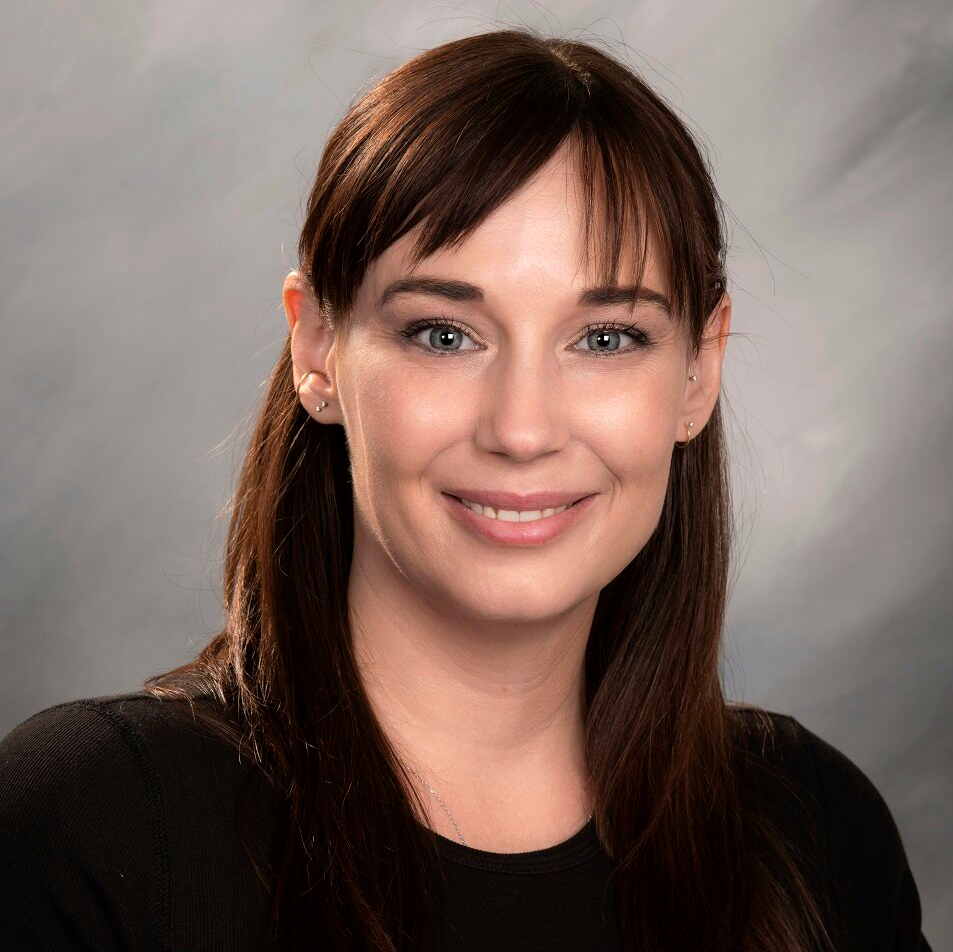
Dr. Andrea Bingham
Chapter 8 (w/Patricia Witowsky): Deductive and Inductive Approaches to Qualitative Data Analysis
https://www.youtube.com/watch?v=e1OCkH21NdE
Dr. Andrea J. Bingham, Associate Professor of leadership, research, and foundations at the University of Colorado Colorado Springs discusses two core ways to engage with qualitative data. She discusses how to make meaning from data by first using deductive, or a priori, analysis, which generally means applying theory to the data. Andrea then discusses how to make meaning from data using inductive analysis, which generally means engaging with the data and allowing meaning to emerge. Inductive analysis is a bottom up strategy in contrast to deductive, top down approaches. In the second half of the video, Andrea draws on material from her and her colleague Dr. Patricia Witkowsky’s chapter in the new book from SAGE, Analyzing and Interpreting Qualitative Research: After the Interview. Andrea shares a step by step approach to combine deductive and inductive approaches in a single study and describes how to analyze qualitative data in five cycles of analysis. The figures Andrea discusses in this video may be found in the companion blogpost for SAGE MethodSpace.
https://www.youtube.com/watch?v=e1OCkH21NdE
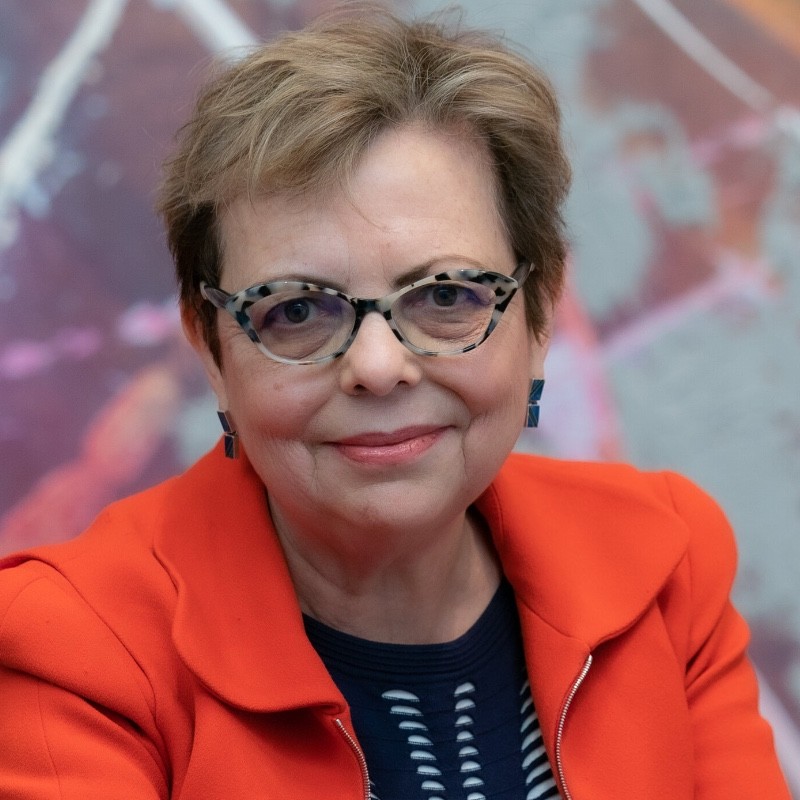
Dr. Silvana di Gregorio
Chapter 6: Voice to Text Automating Transcript
https://www.youtube.com/watch?v=3H1LWMz4-7U
Dr. di Gregorio discusses how her chapter helps qualitative researchers seize opportunities provided by automatic transcription systems and transform what had been a mind-numbing task into a major step in the analysis. The chapter begins with a literature review that describes the development of automated transcription tools and discusses how contemporary automated transcription systems change voice to text. Dr. di Gregorio argues automatic systems liberate transcription from a mechanical practice, where researchers struggle to “get the words down,” to a fluid step in the interpretive journey. Dr. di Gregorio argues the tools provided by automated transcription systems allow researchers to change the sequencing and flow of their interpretive work. High quality transcription systems provide a raw transcript in half the time it took to record the interview. Researchers may immediately engage with this material and, for example, note participants’ gestures and tones of voice directly on the transcript. This fluidity allows researchers to revise their interview instruments, immediately after the first interview, and quickly query respondents about the transcribed text.
https://www.youtube.com/watch?v=3H1LWMz4-7U
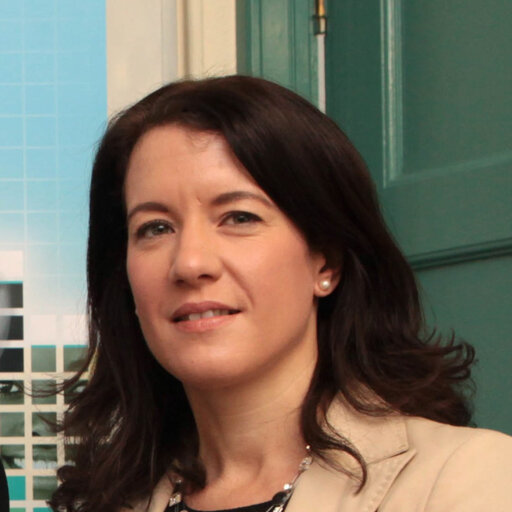
Dr. Elaine Keane
Chapter 15: Critical Analytic Memoing
https://www.youtube.com/watch?v=V9S70770Iuk
Dr. Elaine Keane discusses the use of analytic memos in qualitative research as a tool to bring a sharp and incisive edge to critical inquiry. Dr. Keane’s chapter provides examples of memos at different stages of the constructivist grounded theory process and it traces the development and evolution of a complex conceptual inquiry. Dr. Keane describes how memos produce and generate the ideas shaping inquiry and provides step-by-step instructions. Critical analytic memoing helps researchers move from descriptive summaries of codes and categories to abstract, conceptualizing forms of writing. Memos are tools for writing thoughts as they happen and they help researchers play with ideas and concepts from the analysis.
https://www.youtube.com/watch?v=V9S70770Iuk

Dr. Adrian Larbi-Cherif, Cori Egan, & Dr. Joshua L. Glazer
Chapter 17: Emergent Analysis
https://www.youtube.com/watch?v=dgINIP7smEs
The research team discusses their efforts to investigate the Tennessee iZone, a district-led effort to dramatically improve, or “turn around,” 23 of its lowest performing schools. As the research team studied 150+ interviews conducted with leaders and across the district, they discovered their emergent findings did not fit the original research questions. In their chapter, the research team describes how they reanalyzed these data. They discus how they developed new research questions, created a purposeful sample of the original 150+ interviews, recoded the material, and produced a new analysis, without losing methodological rigor. The video concludes with advice to beginning researchers to use formal qualitative methods to learn what the data say, rather than writing up first impressions.
https://www.youtube.com/watch?v=dgINIP7smEs
Dr. Daniel Turner
Chapter 7: Coding System Design and Management
https://www.youtube.com/watch?v=WX6ffUtsf_0
In this interview, Dr. Turner discusses how his chapter is intended to help qualitative researchers manage the coding process and order and structure their data. The chapter emphasizes the importance planning ahead and carefully managing the coding process. It provides practical tips for coding that are relevant to a broad range of approaches to qualitative data analysis. The chapter also discusses the benefits and challenges of collaborating for qualitative data analysis and leading a team of analysts Dr. Turner’s Bio Daniel Turner started as a qualitative researcher in health, healthcare delivery, and long-term conditions, and he engaged in collaborations with national bodies and universities across the UK. He left academia in 2014 to start up Quirkos, when he found an unmet need for simple and reliable qualitative analysis software. He is founder and director of Quirkos and writes a popular blog on qualitative methods.
https://www.youtube.com/watch?v=WX6ffUtsf_0
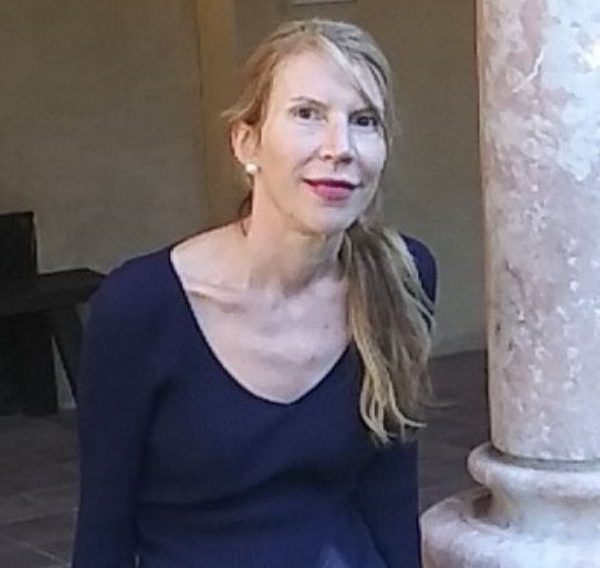
Dr. Mariaelena Bartesaghi
Chapter 5: Theories and Practices of Transcription from Discourse AnalysisV2
https://www.youtube.com/watch?v=RocfzEmjPRE
Dr. Mariaelena Bartesaghi describes the practice transcription in discourse analysis. Her chapter discusses how to use the symbols of conversation analysis to transcribe the messiness and fluidity of real speech. In discourse analysis, transcription is highly theorized. Conversation analysis creates gives researchers tools to develop transcripts that communicate the complexity of people’s speech and produce evidence other researchers may examine and contextualize from a wide range of theoretical perspectives. Dr. Bartesaghi emphasizes this empirical evidence may be used to defend and falsify claims about the meanings shared as people speak and act.
Mariaelena Bartesaghi is Associate Professor of Communication at The University of South Florida. She studies institutionalization, or how social discourses of authority can be traced in spoken and written discourse. Her research on therapy, psychiatry, crisis settings, academia, and qualitative research as practice has been published in journals such as Discourse Studies, Management Communication Quarterly, Communication Studies, The Review of Communication, Communication & Medicine and Language under Discussion. She is the Editor in Chief of Qualitative Research in Medicine and Healthcare.
https://www.youtube.com/watch?v=RocfzEmjPRE

Dr.
Chapter
—–,

Dr.
Chapter
—–,
Peer Review Sessions for ICQI (International Conference of Qualitative Inquiry), Friday May 21st, 2021
Analyzing and Interpreting Qualitative Research, After the Interview: Section 1- Preparing for Data Collection and Engaging in Interpretation, (ICQI), Friday May 21st, 2021
This is an edited zoom video of the first peer reviewed session put up by the co-editors of Analyzing and Interpreting Qualitative Research: After the Interview at the International Congress of Qualitative Inquiry (ICQI), on Friday May 21st, 2021
04:12 Michelle Angelo-Rocha 18:20 Sheryl L. Chatfield 34:57 Sally Campbell Galman 52:00 Paul Mihas
Analyzing and Interpreting Qualitative Research, After the Interview, Peer Review Session: Section 2- Interpretation and Writing Strategies, (ICQI), Friday May 21st, 2021
02:43 Paul Mihas 12:51 Elaine Keane 31:27 Jaime Leigh Fiddler 45:00 Johnny Saldaña, Discussant 50:10 General Discussion
Analyzing and Interpreting Qualitative Research, After the Interview, Peer Review Session: Section 3- Strategies for Coding and Categorizing Data, (ICQI), Friday May 21st, 2021
00:00 Introduction 02:07 Daniel Turner 15:01 Andrea J. Bingham & Patricia Witkowsky 27:21 Elsa M. Gonzalez & Yvonna S. Lincoln 45:46 Discussant Paul Mihas
Analyzing and Interpreting Qualitative Research, After the Interview, Peer Review Session: Section 4- Performance and Writing Strategies, (ICQI), Friday May 21st, 2021
02:27 Jessica Gullion 14:26 Johnny Saldaña 27:41 Aishath Nasheeda 40:25 Mitch Allen & Sophie Tomas 104:38 Discussant Helen Salmon

 Trace Taylor